Veranstaltungen
When?
24/25 October 2025
Where?
HKB, Kammermusiksaal, Papiermühlestr. 13a, 3013 Bern
Media Partner
Schweizer Musikzeitung SMZ

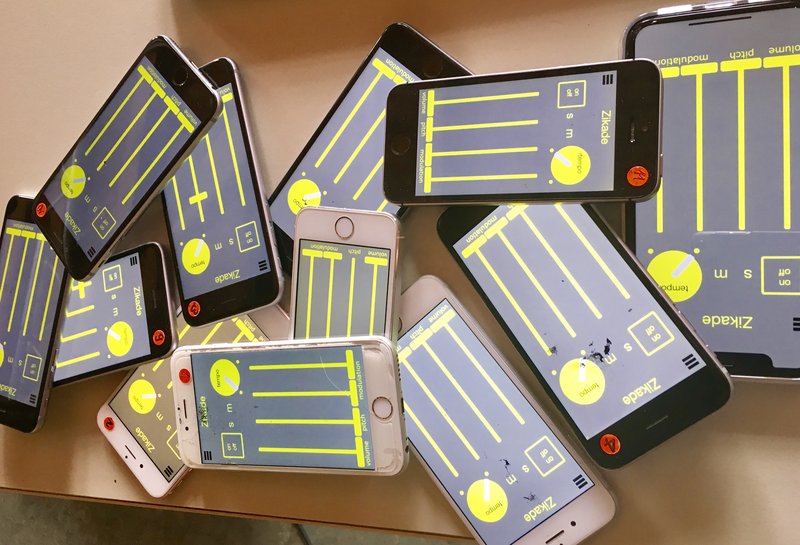
Since the introduction of the smartphone in the first decade of the 21st century, a wide range of experimental art forms have emerged that explore and utilise the possibilities of this technology.
A smartphone is a multifunctional communication medium and a powerful, wireless, networked, handy computer. In today's society, it is a very widespread and heavily used device. With the social acceptance of the smartphone, completely new forms of (social) media and communication tools have emerged. In technical terms, it offers – among other functions – a loudspeaker, microphone, display, light, sensors and network connections. These characteristics of smartphones open up possibilities for compositional processes and performative situations.
A research project led by Lara Stanic investigates the potential of the smartphone as a performance tool in composition and Sound Arts. The focus is on the technical possibilities as well as on the artistic and aesthetic dimensions of smartphones in compositional practice. Departing form that project, the Bern Academy of the Arts HKB's Institute Interpretation in collaboration with the Sound Arts study programme invite experts from the fields of composition, sound art, technological innovation, musicology and music education to a two-day symposium and concerts on the subject. The following questions will be discussed in academic papers, concert-lectures and performances:
- What possibilities do smartphones offer for musical composition and sound art?
- How do artists utilise the technological potential of the smartphone?
- How are the potentials of the smartphone used by artists to create dynamic, immersive and agile experiences?
- What new technical applications and platforms are being developed from artistic creation?
- What role do mobility and ubiquity of communication technologies play in the use in sound art and composition?
- What relevance does the telephone have as an original medium of communication, but also of music transmission?
- How is the smartphone used to promote creative processes in music education?
Image: Smartphones with the Zikada synthesiser for the composition “Zikaden” by Lara Stanic for the Zurich Baroque Orchestra
KALENDER
- 28. Oktober 2026Forschungs-Mittwoch Doktoratsprogramme Musik
Die HKB bietet MA-Absolvent*innen aus der Musik drei wissenschaftliche oder...
mehr lesen - 4. November 2026Assoziierte Forschende: Präsentation der Projekte
Assozziierte Forschende der HKB präsentieren ihre Projekte. Nähere Informationen folgen.
...
mehr lesen - 12./13. November 2026Cooperative Practices in the Arts from 1800 to the Present
The workshop addresses cooperative forms of working together in the arts from the early 19th century...
mehr lesen - 14. November 2026Global Piano Roll Meeting Prelude 13
We are pleased to announce that the Global Piano Roll Meeting series will continue.
Music rolls and...
mehr lesen - 21. November 2026Herbsttagung 2026 der CH-EM
Die diesjährige Herbsttagung der Schweizerischen Gesellschaft für Ethnomusikologie (CH-EM) findet am...
mehr lesen

Die Hochschule der Künste Bern
ist ein Departement der Berner Fachhochschule
