Veranstaltungen
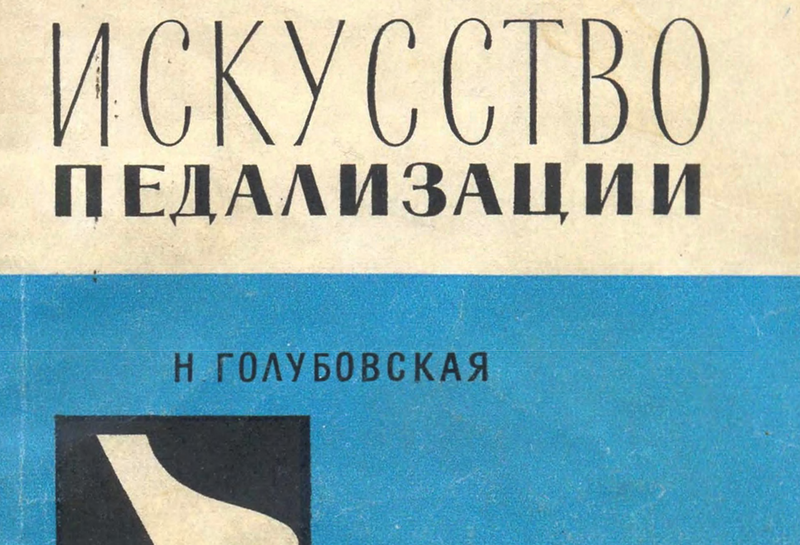
Although the term “secret” and its cognates are not uncommon in The Art of Piano Pedaling (1967), Nadezhda Golubovskaya’s treatise exhibits an analytical predisposition often associated with Leningrad musicianship. This is evident, for example, in her minute attention to the components of piano tone, her recurrent allusions to the music’s linear structure, and her discreet use of concepts borrowed from Yavorsky's “intonation theory”. Little known in the West, the treatise has nonetheless retained a canonical status in the Russian-speaking world.
Aiming at an English translation and critical edition relevant to contemporary practitioners and scholars, I subject the treatise to a close semiotic reading, fleshing out networks of practices and influences often invisible to Western readers today, while placing Golubovskaya's word choices in conversation with contemporary Western discourse on structure, timbre, and expression, without eliding epistemic differences. Beyond her structural reasoning, special critical attention is also given to her timbral metaphors and their cultural contingency, her pointed critique of acoustic criteria for pedaling, and her principled distrust of pedaling notation.
Speaker: Yannis Rammos
Host: Martin Skamletz, Institute Interpretation
KALENDER
- 8./9. Oktober 2026Les mouvements artistiques sécessionnistes (Paris, Berlin, Vienne et au-delà)
Ce colloque se propose de confronter dans une perspective comparée diverses tendances de type...
mehr lesen - 28. Oktober 2026Forschungs-Mittwoch Doktoratsprogramme Musik
Die HKB bietet MA-Absolvent*innen aus der Musik drei wissenschaftliche oder...
mehr lesen - 4. November 2026Assoziierte Forschende: Präsentation der Projekte
Assozziierte Forschende der HKB präsentieren ihre Projekte. Nähere Informationen folgen.
...
mehr lesen - 12./13. November 2026Cooperative Practices in the Arts from 1800 to the Present
The workshop addresses cooperative forms of working together in the arts from the early 19th century...
mehr lesen - 14. November 2026Global Piano Roll Meeting Prelude 13
We are pleased to announce that the Global Piano Roll Meeting series will continue.
Music rolls and...
mehr lesen

Die Hochschule der Künste Bern
ist ein Departement der Berner Fachhochschule
